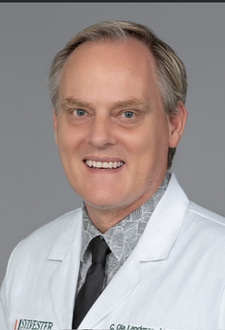
C. Ola Landgren, MD, PhD
- Position
- Board Member
- Website
- Visit Website
Dr. C. Ola Landgren is an MD/PhD Hematology/Oncology specialist with almost 30 years of leadership experience in translational cancer medicine. Over the past two decades, he has served as the leader for large programs at the National Cancer Institute/National Institutes of Health (NCI/NIH), Memorial Sloan Kettering Cancer Center (MSKCC), and University of Miami/Sylvester Comprehensive Cancer Center (UM/SCCC). His leadership strengths include strong communication and presentation skills, strategic thinking, decision-making, change management, prioritization, delegation, team building, and employee development and recruitment.
Currently, he is a Professor of Medicine, Leader of the Translational and Clinical Oncology program, Chief of the Division of Myeloma, and Director of the Myeloma Research Institute at UM/SCCC. Before joining UM/SCCC in 2020, he served as Chief of the Myeloma Service at MSKCC and was Professor Medicine at Cornell Medical College from 2014 to 2020. Prior to that, he served as Senior Investigator and Chief of the Multiple Myeloma Section at the Intramural Program of the NCI/NIH from 2004 to 2014. Prior to joining NCI/NIH, he earned his MD and PhD at Karolinska Institute in Stockholm, Sweden. Throughout his career, his clinical and scientific focus has been on the development of novel treatment strategies for patients with myeloma, partnered with molecular profiling (personalized oncology) and development of technologies for minimal residual disease (MRD) assessment: targeted detection/intervention to prevent, find, and treat. He has published over 500 peer-reviewed articles in high impact journals. Numerous times, he has chaired sessions and presented data at international conferences including American Society of Hematology (ASH), European Hematology Association (EHA), and the American Society of Clinical Oncology (ASCO). He is a member of American Society of Clinical Investigation (ASCI).
As a new NCI-Designated Cancer Center, UM/SCCC had identified the need for a pan-cancer program focusing on Translational and Clinical Oncology (TCO), and he was recruited as the inaugural leader for the TCO program in late 2020. Under his leadership, the program has built infrastructure and processes, recruited experts, and launched the program with initiatives focusing on translational science. Currently, the program has 46 members from 14 different departments, and the program is growing rapidly. There is a pan-cancer translational and clinical focus centered around biomarkers and novel treatment strategies.